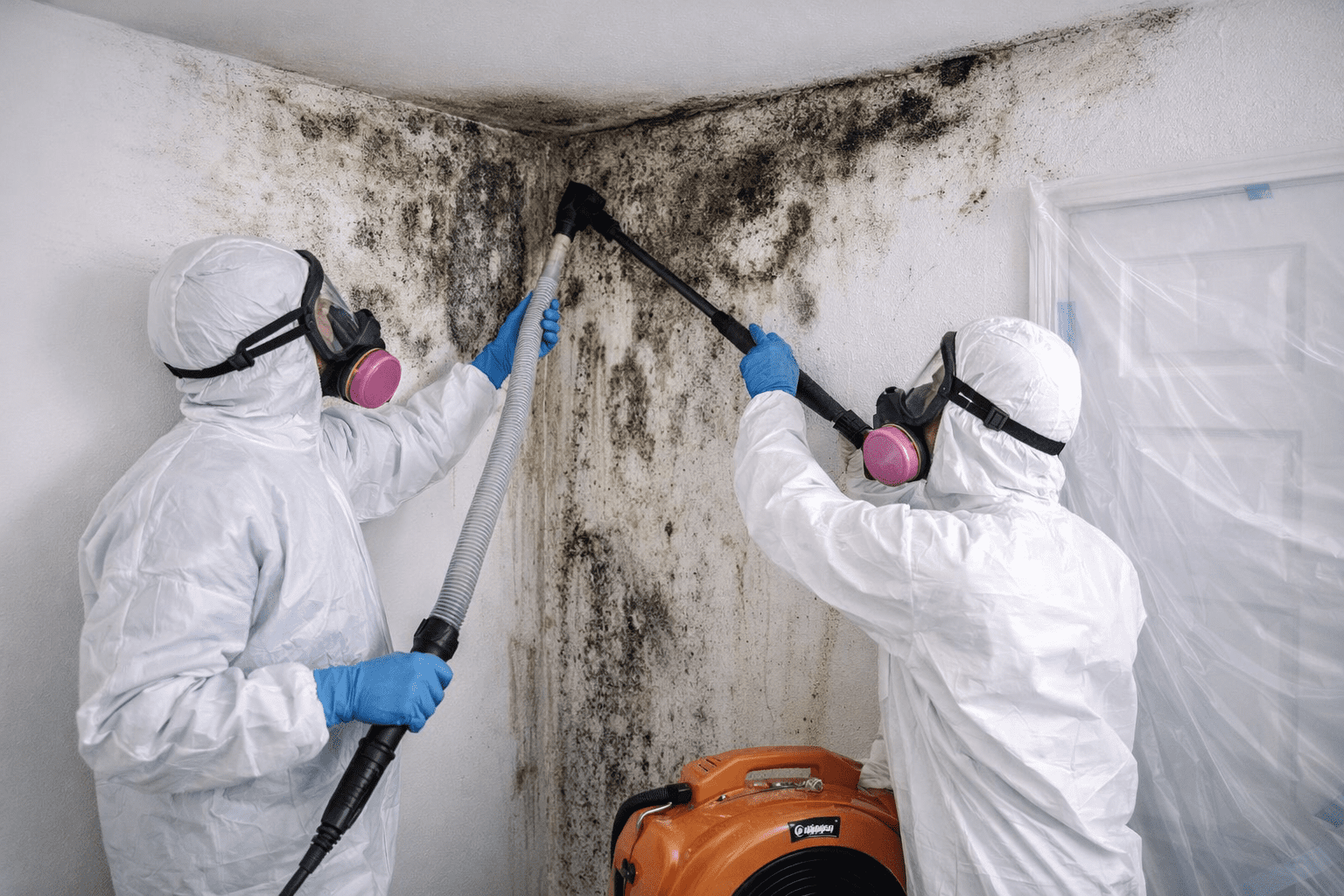
Black Mold Cleanup & Remediation Across Louisiana
Louisiana’s high humidity, heavy rain, and storm-driven water intrusion can turn small leaks into fast-growing mold problems. If you’re seeing dark staining, peeling paint, or musty odors in bathrooms, attics, crawlspaces, or behind drywall, we help you identify the moisture source and choose the safest cleanup or remediation path.
Black Mold Services We Support Across Louisiana
Mold “removal” is not just wiping a surface. The right approach depends on where the mold is, what materials are affected (drywall, insulation, wood, HVAC), and what’s feeding the moisture. These are the most common services Louisiana homeowners and landlords request after leaks, storms, or high indoor humidity.
Mold Inspection & Moisture Checks
We focus on finding the moisture source first—roof leaks, plumbing drips, AC condensation, wet crawlspaces, or poor bathroom ventilation. Moisture readings help confirm what’s damp behind surfaces.
Containment to Limit Spore Spread
When mold is more than a small spot, containment can help keep spores from spreading to clean rooms during cleanup. This is especially important in rentals and multi-room homes.
Surface Mold Cleanup (Non-Porous Areas)
For tile, sealed surfaces, and some hard materials, careful cleaning plus drying can be appropriate. The key is controlling moisture so growth doesn’t return.
Drywall, Insulation & Material Removal Planning
Porous materials (like drywall and insulation) can hold growth deep inside. When these are affected, removal and replacement planning is often safer than repeated surface cleaning.
Attic & Crawlspace Mold Guidance
Louisiana attics and crawlspaces often grow mold from humid air meeting cooler surfaces. We help outline airflow, vapor control, and drying steps to reduce recurring growth.
Post-Leak / Post-Flood Next Steps
After water damage, drying speed matters. We provide practical steps to reduce risk—what to dry first, what to remove, and when professional remediation makes sense.
Musty Odor Troubleshooting
Musty smells can come from hidden damp drywall, under-sink cabinets, wet insulation, or HVAC/return areas. We help narrow the likely zone so you don’t waste money guessing.
Prevention Plan for Louisiana Humidity
Long-term control often requires a few basics: fix the leak, improve ventilation, manage indoor humidity, and watch common hot spots like bathrooms and closets.
Why Black Mold Spreads Fast in Louisiana Homes
Mold can begin growing on damp materials quickly when moisture and organic surfaces are present. In Louisiana, the combination of humid air, warm temperatures, and frequent water intrusion creates ideal conditions— especially in older homes and rental units with ventilation gaps.
Hidden Moisture Behind Walls
Slow roof leaks, plumbing drips, and AC condensation lines can keep drywall damp where you can’t see it. That’s why “no visible mold” doesn’t always mean the area is dry.
Post-Storm Dampness
After heavy rain or storms, water can soak baseboards, insulation, and flooring. If the area isn’t dried thoroughly, mold can spread into adjacent rooms.
Bathroom & Kitchen Humidity
Daily steam, poor exhaust fans, slow drains, and under-sink leaks feed mold on grout, caulk, and cabinet bottoms—especially when doors stay closed.
Crawlspace & Attic Condensation
Warm, humid air meets cooler surfaces and condenses. That can create persistent musty odors and recurring growth on wood, insulation facings, and ductwork.
HVAC & Vent Areas
Return vents, air handlers, and drain pans can become problem zones if condensation isn’t managed. Musty odors that worsen when AC runs can point to these areas.
Porous Materials Hold Growth
Drywall paper, insulation, and some wood surfaces can trap mold deeper than the surface. If the source remains, mold can return even after “cleanup.”
What to Do First if You Suspect Black Mold
These steps are meant to be practical for Louisiana homes and rentals. If you have extensive growth, recurring water intrusion, or anyone in the home has breathing issues, it’s smart to get professional guidance.
1) Stop the Moisture Source
Fix the leak, dripping supply line, AC drain issue, or roof entry point. Mold cleanup without moisture control usually fails.
2) Dry the Area Thoroughly
Use ventilation and dehumidification when possible. Focus on wet drywall edges, cabinets, baseboards, and flooring transitions where dampness lingers.
3) Don’t Spread Spores
Avoid aggressive brushing or running fans directly at visible growth without containment—this can spread spores to clean rooms.
4) Identify What’s Affected
Mold on tile is different than mold in drywall. Knowing what material is involved helps decide whether cleaning is enough or removal is safer.
5) Get a Clear Plan
A simple step-by-step plan (what to do first, next, last) prevents wasted money and reduces re-growth risk— especially after storm water or floods.
Tip: If you notice musty odors after storms, check closets on exterior walls, under-sink cabinets, and attic/crawlspace access points—these are common Louisiana “hidden damp” zones.
Our Black Mold Cleanup Service Areas Across Louisiana
We support homeowners, landlords, and property managers across Louisiana—especially after leaks, storms, or high humidity. Below are example hubs we commonly serve.
Common Questions About Black Mold Cleanup in Louisiana
Clear, practical answers—focused on moisture control and safe cleanup. If you want, I can convert these into an accordion FAQ section like your Section 7 design.
Is black mold always dangerous?
Any indoor mold growth signals a moisture problem. Some people are more sensitive than others. The safest approach is to address moisture, clean appropriately, and avoid spreading spores into clean areas.
Why does mold keep coming back?
Most repeat issues come from unresolved moisture: a slow leak, poor ventilation, or high indoor humidity. Fixing the source is the “permanent” solution.
Can I just paint over it?
Paint may hide staining temporarily, but it doesn’t remove mold or fix moisture. If the surface stays damp, growth can return behind paint.
What areas should I check first?
Bathrooms (fan/caulk/grout), under sinks, behind toilets, attic and crawlspace transitions, and any room with recent roof leaks or water stains.
Do you help with rentals and landlords?
Yes—clear documentation and a step-by-step plan helps with tenant communication, repair sequencing, and preventing future moisture-related complaints.
When should I call for help?
If the area is large, recurring, tied to water damage, or you suspect mold in drywall/insulation/HVAC, it’s smart to get an inspection and a safe remediation plan.
Ready to Remove Black Mold in Louisiana?
If you’re dealing with musty odors, visible growth, or recent water damage, get a clear plan: locate the moisture source, choose the right cleanup scope, and reduce the risk of re-growth in Louisiana humidity.